The Problem
Some general data
At least 59 women lost their lives at the hands of their partners or ex-partners in 2019 in Spain. Of these, more than 70% never filed a police report. On the other hand, more than 160,000 domestic violence cases were reported that same year.
The numbers are tragic, but they are only the tip of the iceberg. According to the WHO, 1 in 3 (35%) women worldwide have experienced either physical and/or sexual intimate partner violence.
Surveys
By using a Lean Survey Canvas, I designed an online survey that was answered by 137 people in one day (70% of them were women). Of these, about 30% had experienced signs of gender-based violence (GBV) with a partner. Of course, these results are not representative, as the sample is very small, but they are close to the WHO statistics.
1 in 3
women experience intimate partner violence
+70%
casualties never reported
160k
domestic violence cases reported in 2019
Let's transfer this data to Spain. About half of the total population (22 million) are women. Of these, 14 million are between the ages of 15 and 60. If one third of them suffer or have suffered some kind of gender violence, we are talking about almost 5 million women. Even though the data is considered to be underestimated.
This means that we all know more than one woman who has been or is being abused by her partner. And many of us don't even know. Why is there still so much silence on this subject?
Interviews
With this data in hand, I conducted interviews with gender-based violence experts, psychologists and women survivors to further explore the reasons. They all agreed that it is impossible for a woman to get out of a gender-based violence situation without help.
It is impossible for a woman to get out of a gender-based violence situation alone
The problem is that many never talk to anyone about what is going on out of fear, out of shame and because they live with the illusion of everything going back to the way it was in the beginning.
Persona
Using the quantitative and qualitative data from the conducted interviews and existing statistics, I defined a target group profile to better empathize with my main user group and prioritize the goals according to their needs.
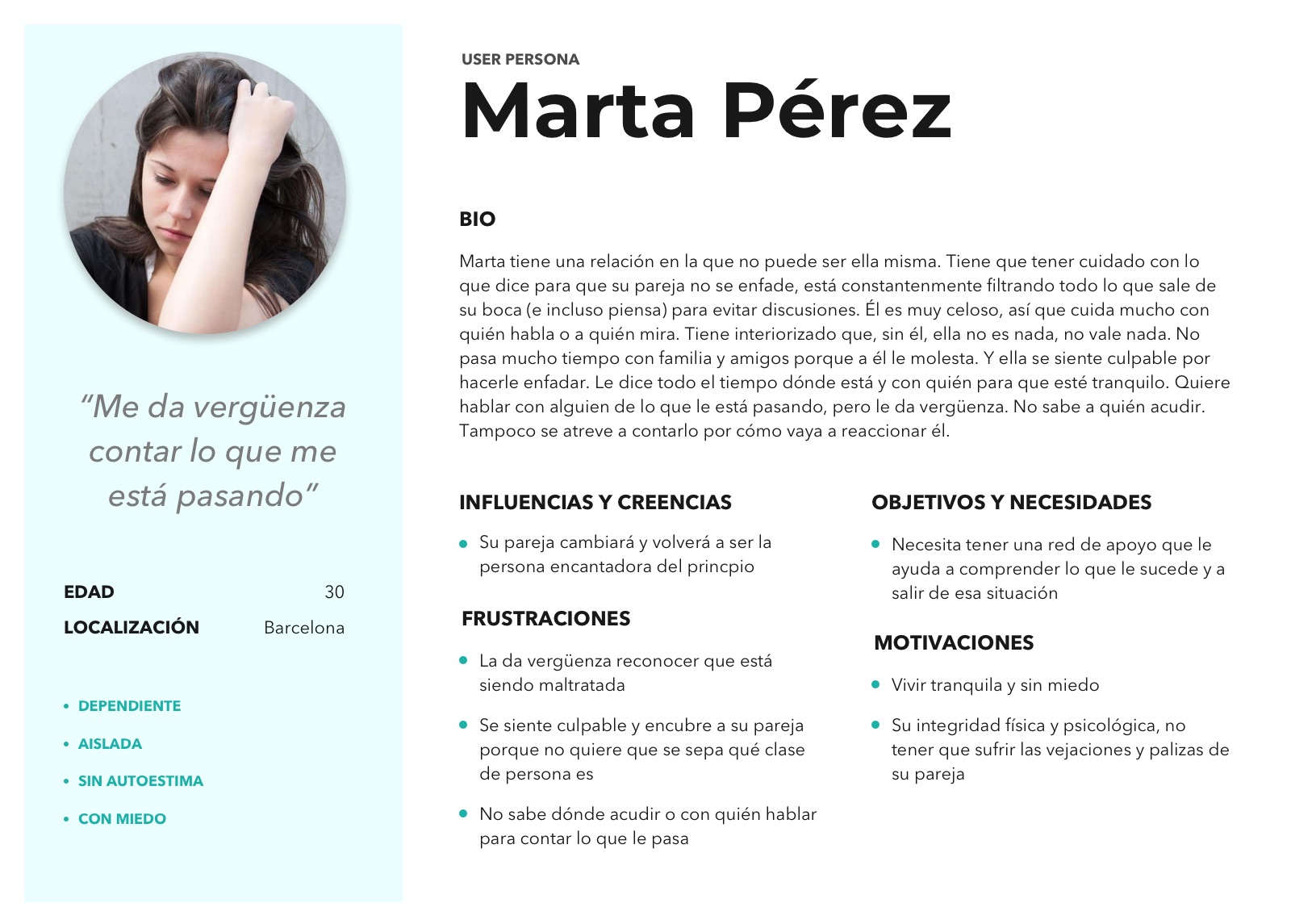
There's no such thing as an abused woman profile. Any woman of any age, social class or educational level can be suffering from GBV. What they all have in common is that, once in the relationship, their self-esteem is totally shattered, they end up isolated from family and friends and feeling great embarrassment of having ended up in such a relationship.
These emotions make them not want to talk about what is happening to them with anyone. This makes it difficult to know which women are being abused and therefore to help them.
Competitive Analysis
The apps for helping abused women that I found and analyzed were the following:
- Anticípate
- Violentómetro
- Ellas
- AlertCops
- Todas Unidas
- Pillada por ti
Most had a purely informational function. Some included a test to determine if any evidence of abuse was present in the relationship. Others included a function to call emergencies in case of need. But none solved the problem of embarrassment and fear that kept victims from asking for help.
The Solution
Violeta is a messaging app that safely connects abused women with professionals and women survivors.
Support network
Given that women who experience GBV cannot get out of it alone, they would need a support network. Therefore, the solution needed to be a channel of communication that would connect these women with professionals and women survivors who could help them understand and manage their situation.
Anonymity
In order to overcome the problem of embarrassment, the Internet provides us with a valuable resource: anonymity. Users will not have to give their personal details or say out loud that they are abused women.
Safety
In order to make the app safe, it was necessary to hide it from the abuser's view. This way, women like Marta could safely use it. So I decided:
- To disguise the icon of the app
- To hide the content by means of a security key
- To disable notifications
User flows
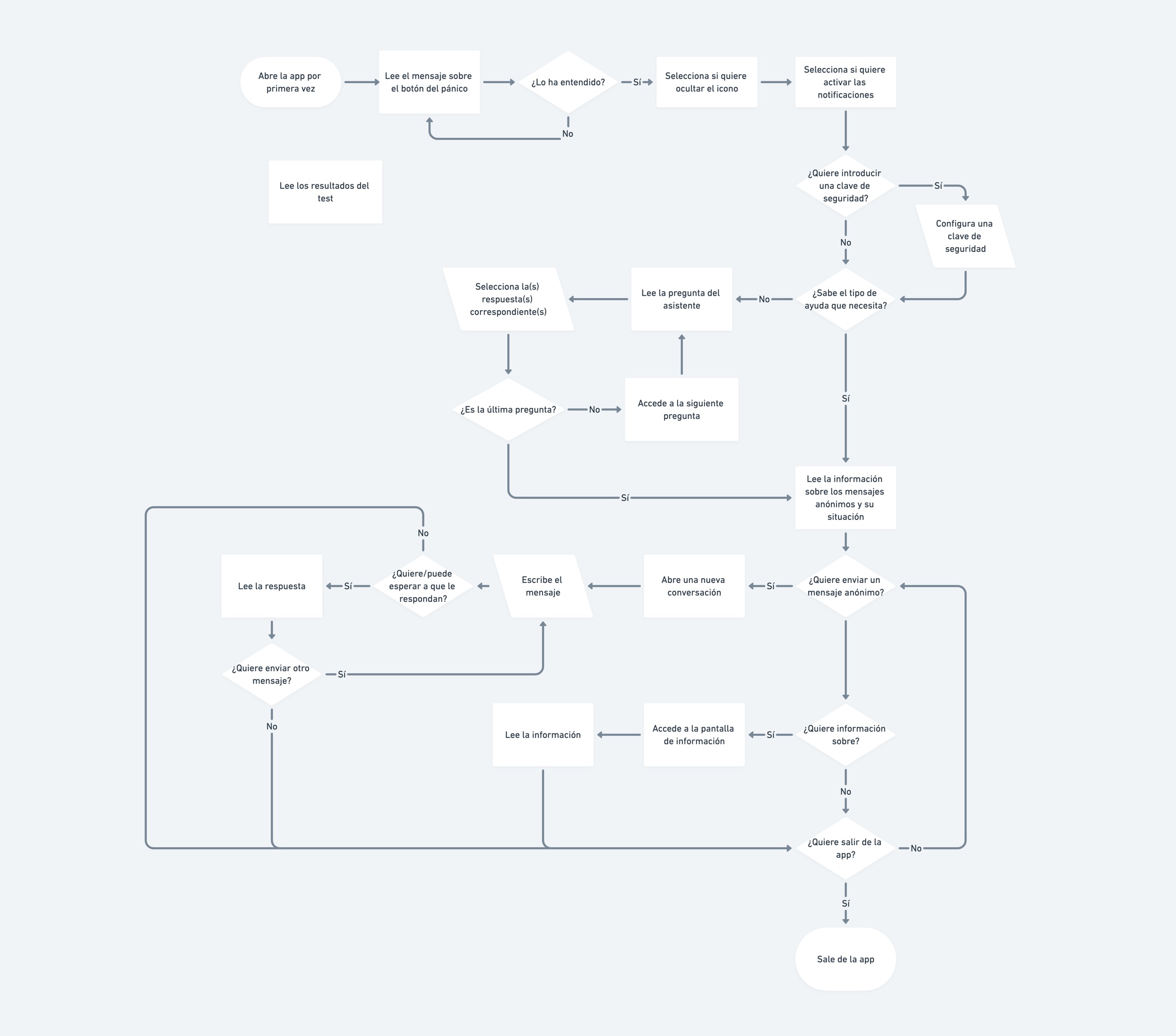
On the first use, an onboarding will be necessary. In this way, the user can configure the required parameters to use the app safely:
View user flow
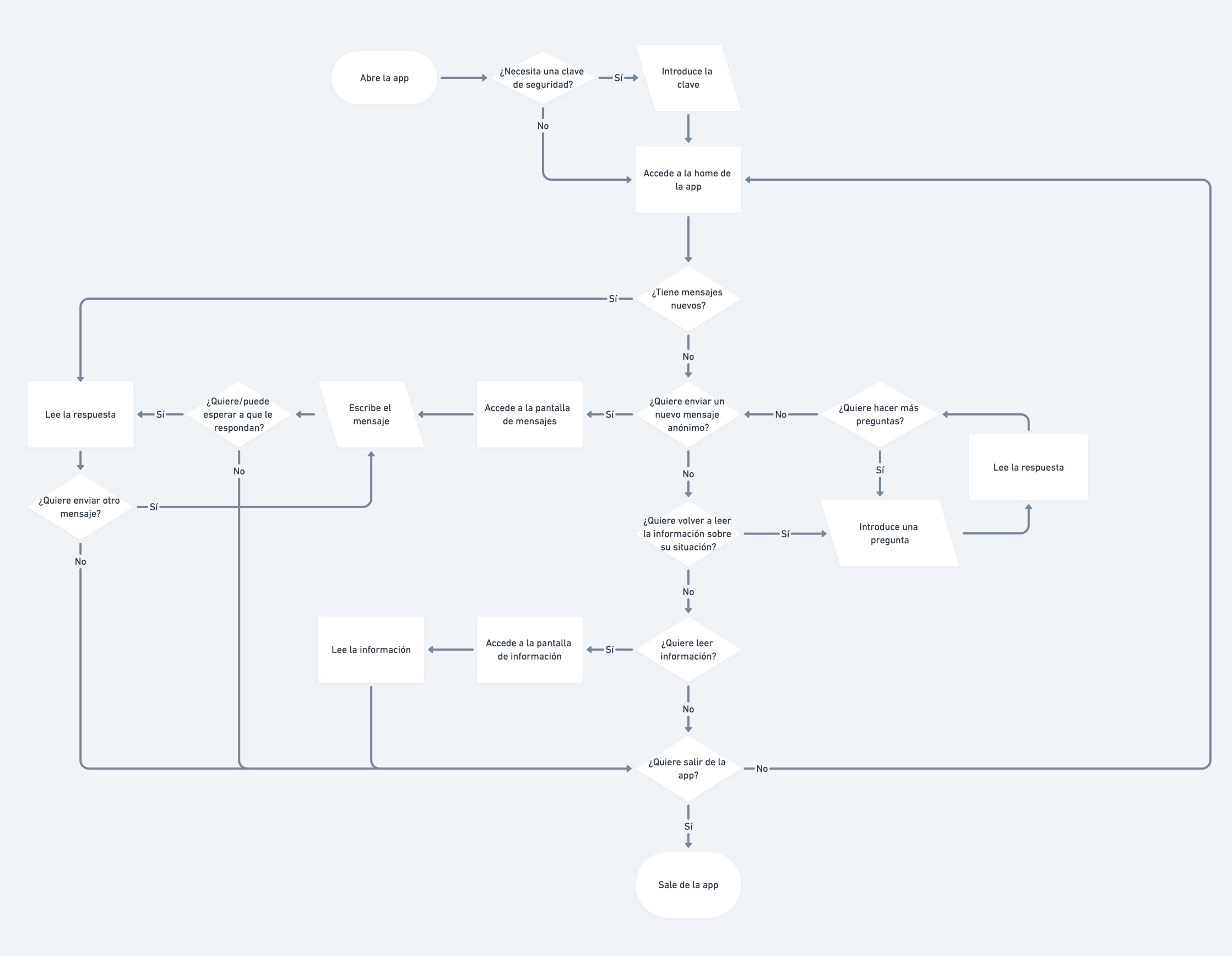
In the subsequent visits the app's usage will depend on the parameters configured in the onboarding:
View user flow 2
Site Map
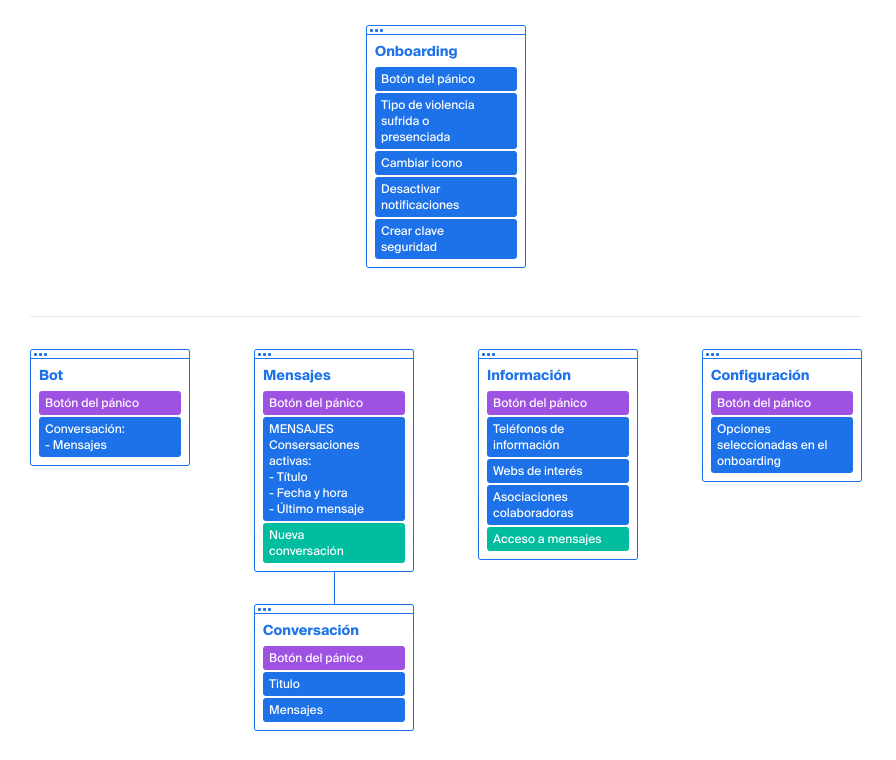
On the basis of the person's needs and the respective solutions to their problems and pain-points, I elaborated the site map.
Concept Sketching
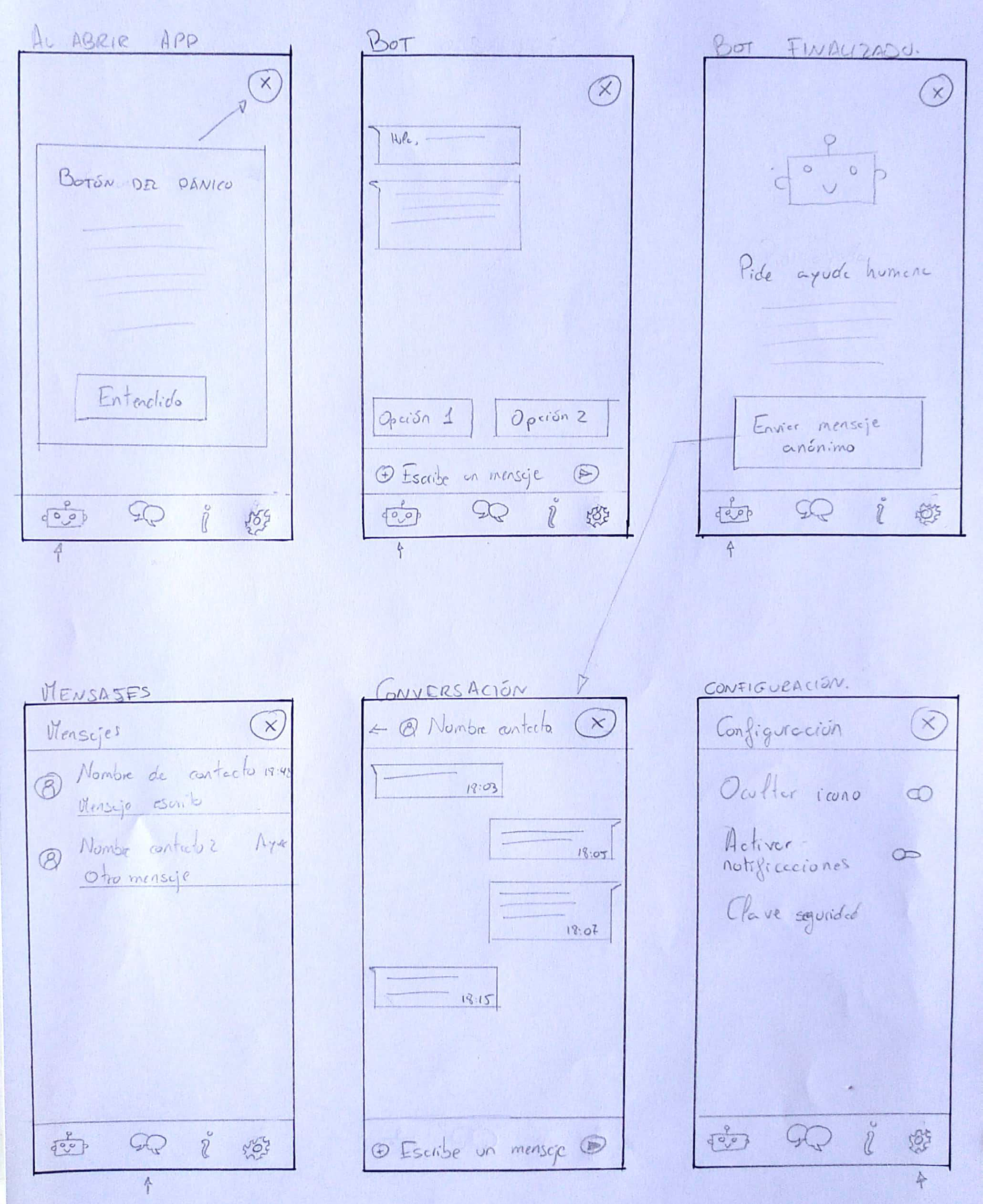
In order to create a friendly and easy to use app, I resorted to using a bot. This way, the interaction with the user is humanized a bit.
View sketch
Wireframing & Testing
Wireframes & Prototype
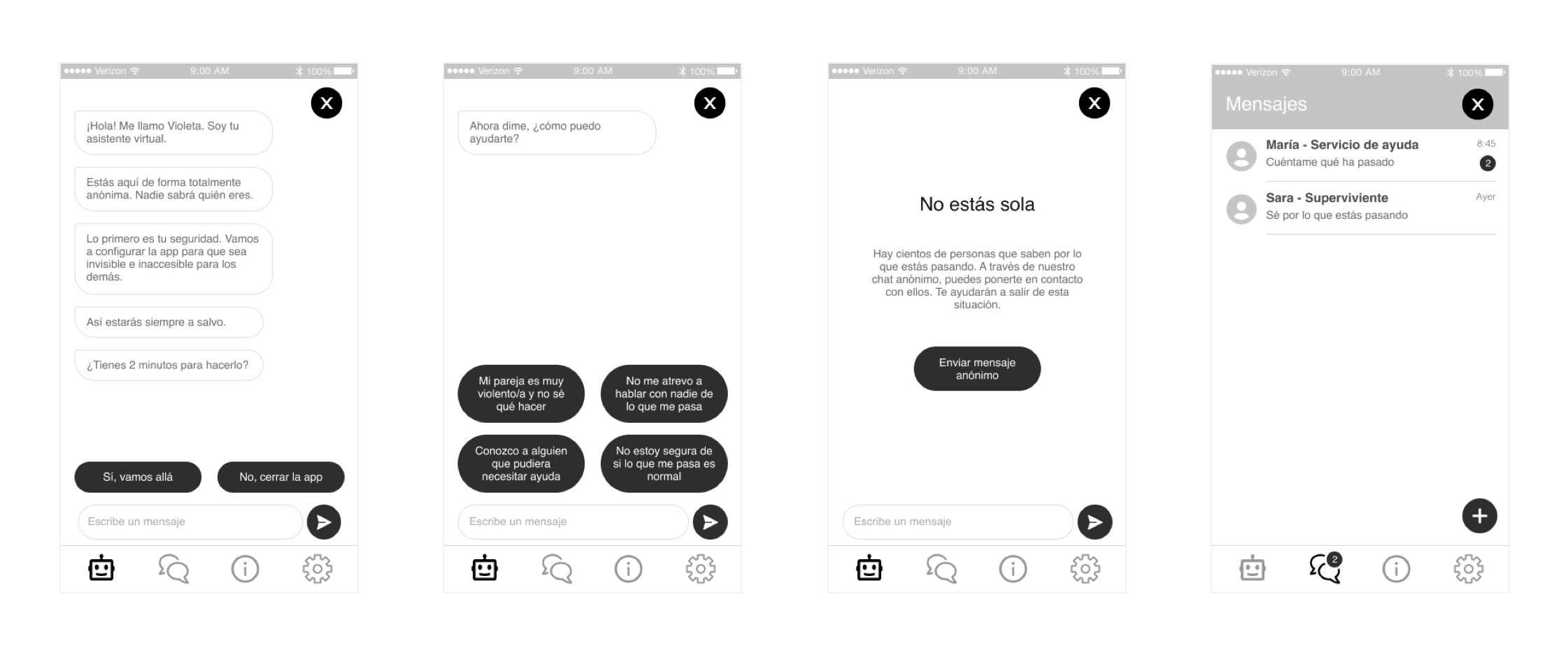
Through mid fidelity wireframes, I designed a fully functional prototype, with all the options so that the user could test it with total freedom.
Testing & Iterating
To ensure that the use of the app was intuitive, I tested the prototype with several users. I found that some onboarding options, such as setting the password, were somewhat confusing to certain users. I made the necessary changes and retested. In a new round of testing, the usability had improved, but there were a couple of concepts that were still unclear, so I made further changes, adding some hints to clarify those concepts. In a new round of testing, the app seemed to be self-explanatory and easy to use.
Visual Design & Prototype
Moodboard
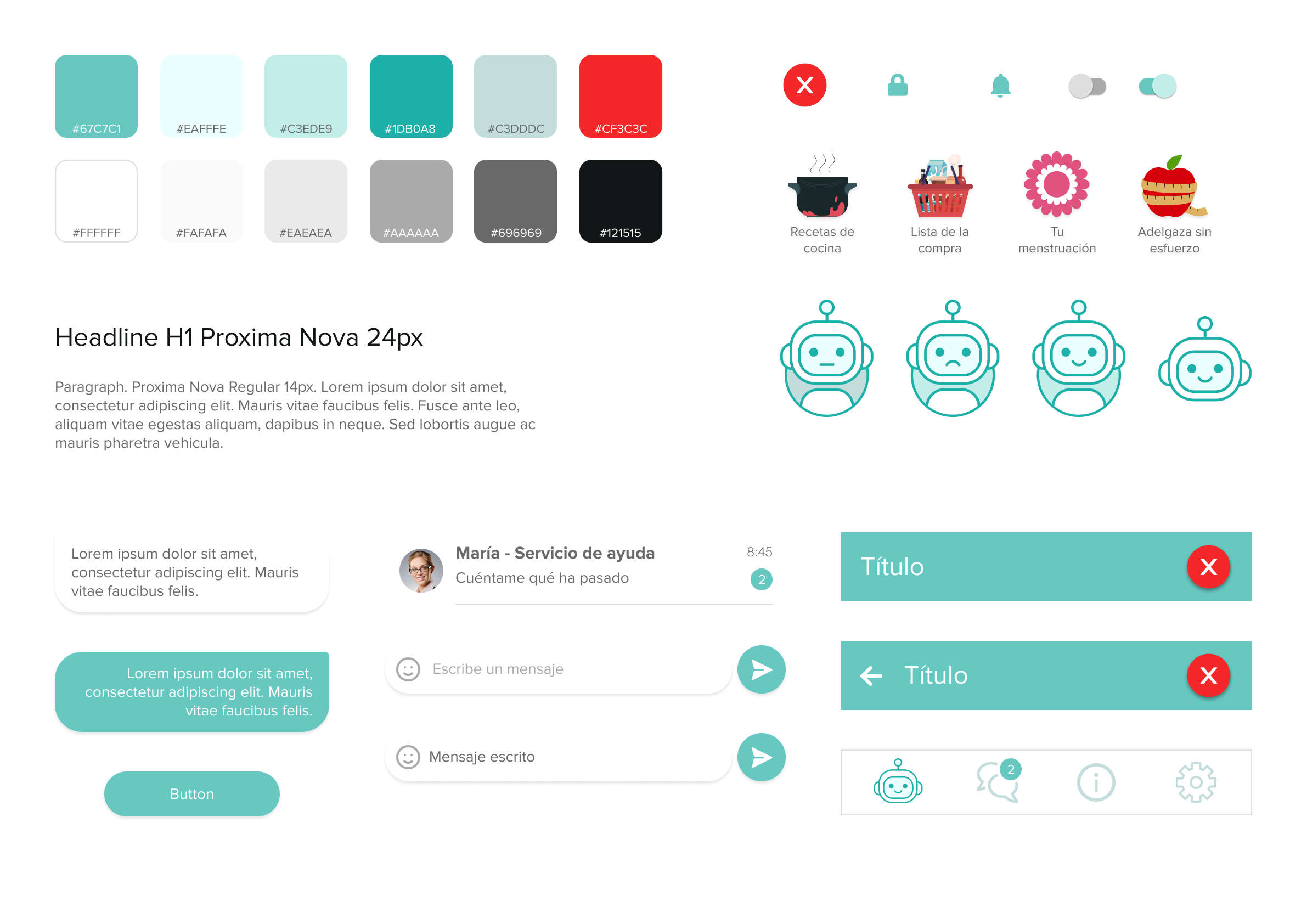
It was time to bring some life to the design. Being an app meant for people who suffer a lot of stress during their day to day life, it seemed appropriate to use colors that conveyed calm and serenity. So I opted for a colour palette close to blue and green.

Style tiles
From the moodboard, I defined the color palette and graphic elements
Mockups
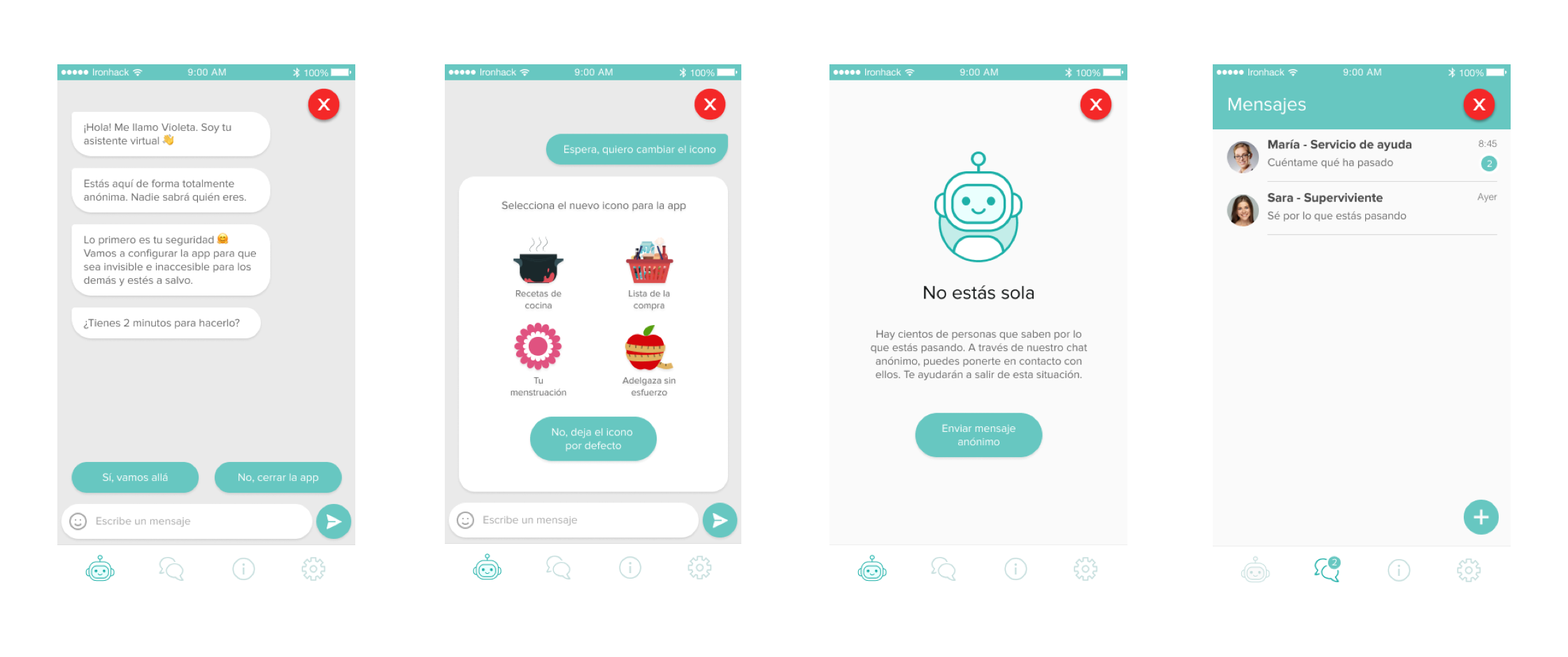
Hi-Fi prototype

Conclusion
Gender-based violence is a very complex and profound problem that obviously requires social transformation from the ground up. This app is just a complement to that transformation. Through its features we break down some of the brakes and barriers — such as fear and shame — that prevent abused women from talking about their situation and asking for help. In this way, perhaps we can help a woman before it is too late.